
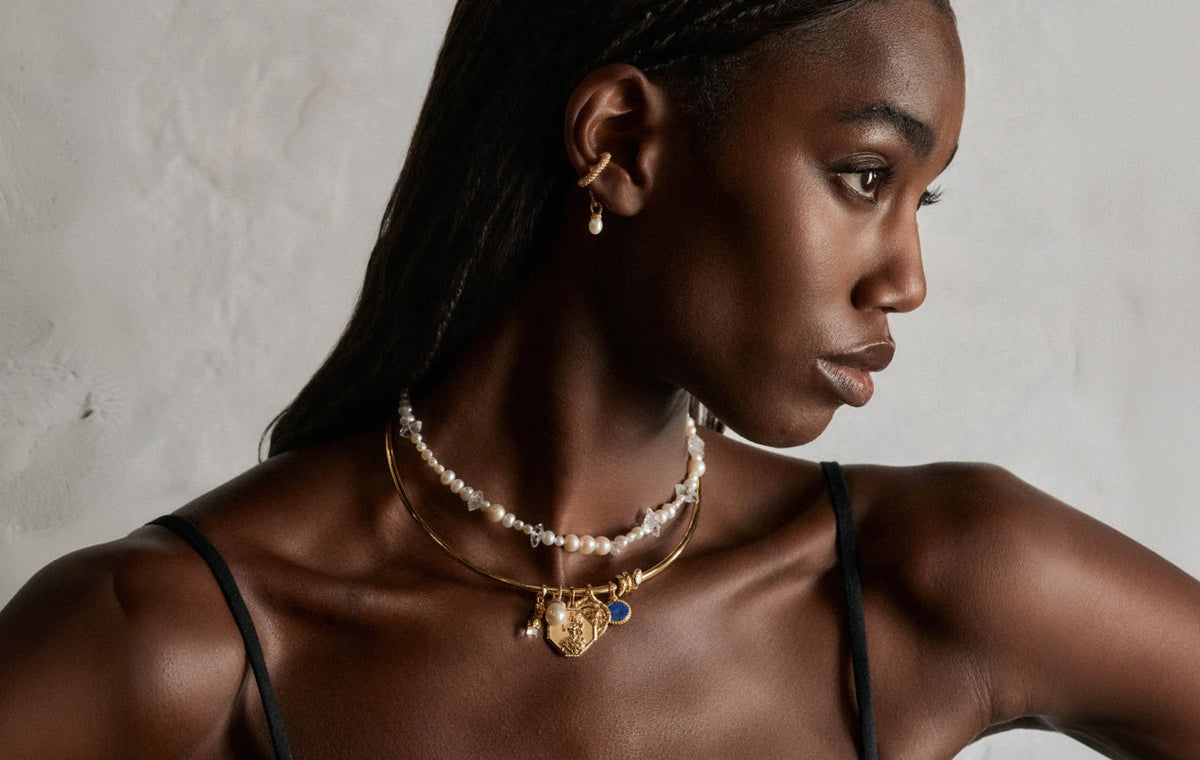
You probably know your zodiac sign, even if you’re not a studious watcher of the stars. But there’s another symbol that correlates to when you were born: your birthstone. Birthstones are one or more precious gemstones assigned to each month of the calendar year. Those born in a given month typically wear their gemstone on birthstone necklaces, rings, or earrings, and they’re a popular symbolic gift.
AT A GLANCE:

The history of birthstones
While birthstones as we know them today are a modern American invention, the practice of wearing your birthstone evolved from ancient origins. A powerful collection of 12 gemstones was referenced in the Bible, with each stone representing one of the 12 tribes of Israel — and, later, coming to represent the 12 months of the year. By the 5th century, it was fashionable to wear items bejeweled with all 12 stones; centuries later, it was more common to wear just one stone at a time in reference to the current month.
The modern tradition of wearing one’s birthstone year-round, rather than changing stones throughout the seasons, didn’t catch on until the 16th century — perhaps spurred on by cross-cultural influence. The Hindu belief that specific energetic gemstones correspond with astrological birth charts may have made its way to the west, laying the groundwork for birthstones as we know them.
The official birthstone list
It wasn’t until 1912 that the National Association of Jewelers officially standardized American birthstones and their corresponding months. The list has undergone some updates since then, yielding the creation of a secondary list. But the basic principles of birthstones have remained the same since 1912.
But that’s not to say that wearing birthstones is old-fashioned. Whether you’re a devotee of your month’s assigned gemstone or not, there are countless ways to incorporate your birthstone into modern, meaningful jewelry that keeps the tradition alive without looking “traditional.”
What’s my birthstone?
This seemingly simple question may have multiple answers. The National Association of Jewelers recognizes both the modern birthstone list, and the list that was historically used. And if your birth month has been given different gemstones to choose from, there are even more options to consider. But finding out which birth stones are associated with your month is only part of the equation when choosing a birthstone necklace, ring, or other piece of jewelry. Those looking to wear their birthstone should consider the qualities of the stone as well as its value and their lifestyle when selecting which one to wear. Some precious gemstones are more durable than others, and some are better suited to everyday wear.

Should I wear my birthstone every day?
Wearing your birthstone is a form of self-expression that continues a time-honored tradition. But whether you decide to wear it every day depends not only on your personal style and aesthetic, but on the gemstone in question. Some gemstones, like pearl and opal (both on the Traditional list) have low hardness ratings — measured by gemologists with the Mohs scale — which makes them better suited for special occasions than for everyday wear. It’s also important to take your lifestyle into consideration. Amethyst and Topaz are brilliantly colored stones that can fade when exposed to direct sunlight or high heat for a prolonged period of time, while Turquoise can react with oils like perfume and cosmetics that alter its color.
Ultimately, all jewelry should be worn with care, but it’s best to be thoughtful about where and when you’d like to wear your birthstone jewelry when investing in a new piece.
About each birthstone
January: Garnet
Garnet is the collective name for several species and varieties of stone, available in almost every color of the rainbow. The most traditional, however, is a deep red hue — in fact, the name “garnet” comes from the Latin for seed, probably referring to a pomegranate seed. This is the color most associated with garnets, and the most popular choice for January birthstone jewelry.
The fiery red of these garnets gives them a clear association with passion, vitality, and love, although they have also been worn throughout history as a protective stone for those entering battle.
When choosing garnet jewelry, consider what shade fits your aesthetic — from the deep red Almandine garnet, to the more purple-hued Rhodolites. Awe Inspired’s garnets are Alamandine, with the classic color that evokes their pomegranate seed namesakes.
Garnets are often paired with gold, like our 14k gold vermeil, but also looks striking with sterling silver.

 |
 |
 |
February: Amethyst
Actually a form of crystal quartz, Amethyst is known for its purple color, which can range from light lilac to deep burgundy. Since purple was favored by royalty throughout history, it was associated with power, wealth, and luxury. Spiritually, however, it’s said to be a gemstone that helps with mental clarity and healing.
Because Amethyst scores a 7 oh the Mohs scale, it’s a very hard and scratch-resistant gemstone, making it a practical and meaningful jewelry gift for those who require something more durable in daily wear.
Depending on their shade of purple, Amethyst can be paired with either silver or gold — the dark red-purple hue lends itself to gold, while light lilac may look best with sterling silver.
March: Aquamarine / Bloodstone
One of many types of beryl gemstones, Aquamarine is characterized by its light blue, oceanic color. The name “aquamarine” even comes from the Latin word for ocean water. Historically called “the sailor’s gemstone,” it was used as a protective talisman for seafarers. It’s also believed to call in tranquility, clarity, and emotional balance.
Bloodstone, which was the traditional birthstone of March, has become harder to find in commercial jewelry over time as demand lessened, leading toward Aquamarine becoming the predominant choice. However, bloodstone jewelry is still available, especially in vintage and antique pieces, where its dramatic blood-red and deep green color can be seen to great effect.
While untreated aquamarine can change color, aquamarines set in jewelry are heat-treated prior to being sold, to ensure they retain their precise color over time.
Depending on their shade of light blue, Aquamarine can be paired with either silver or gold — pale blue Aquamarines are often paired with sterling silver, while blue-green Aquamarines can contrast nicely with gold, especially warmer gold tones or rose gold. 
 |
 |
 |
Diamonds are the stone that requires no introduction. Brilliant and colorless, with beautiful light-refracting qualities, a diamond is a stunning birthstone.
But it’s not only prized for its looks. Diamonds are also exceptionally hard and durable, making them perfect for everyday wear. (Hence their status as the de-facto engagement ring.) But just because they’re a classic choice, doesn’t mean the jewelry they’re set in needs to be standard or expected. Awe Inspired’s designs incorporate diamonds into daring, dark femme styles that fit into an empowering aesthetic, and can be passed down for generations to come.
Because 98% of diamonds are colorless, they are equally suited to gold or silver — including the solid 14k gold in our “Eternal Awe” collection.

 |
 |
 |
May: Emerald
Another member of the beryl family, Emerald is characterized by its rich, deep green color. Associated with opulence and luxury, it has also been thought to enhance the wearer’s wisdom.
Emeralds have been prized since ancient times, worn by royalty and sought out at great expense. Surprisingly to our modern eyes, emeralds were also the stone associated with Aphrodite in ancient Greece — a figure who, today, may be more associated with red or pink, the modern colors of love.
Emerald looks especially opulent when set in gold vermeil or 14k solid gold from our “Eternal Awe” collection — but it’s stunning paired with sterling silver, as well.

 |
 |
 |
June: Alexandrite / Pearl
Alexandrite may not be a gemstone you’re familiar with, but its remarkable characteristic of changing from blue-green in daylight to purple-red under artificial lights means it’s worth taking note of. Discovered in 1830 and named for Czar Alexander II, it’s nothing new — although it was only adopted onto the modern birthstone list in 1952. Prior to that, the birthstone for June was the pearl.
Alexandrite is very durable, ranking an 8.5 on the Mohs scale, which makes it a practical alternative to pearls. However many jewelry wearers born in June still opt for the pearl for their birthstone of choice, due to its ongoing associations with purity, tranquility, wisdom, and prosperity.
While white freshwater pearls remain a classic look that coordinates effortlessly with either silver or gold, pearls are available in many shades including purple-blue-black Tahitian pearls, rich green pearls, or lavender pearls, which look especially magnetic set in gold.


|
 |
 |
July: Ruby
Among the most popular precious gemstones (along with diamond, emerald and sapphire), Ruby is associated with passion, courage, and a warrior’s strength.
Because they’ve been prized for centuries, rubies are also known as a regal stone, having been worn by royals throughout history. They’re even mentioned in the Bible multiple times, underscoring their ancient lineage.
The deep red color of rubies is naturally complemented by gold, either in the form of 14k gold vermeil or solid 14k gold from our “Eternal Awe” collection. However, some rubies skew toward pink, and are better complemented by 14k white gold or sterling silver, for a slightly subtler look.

 |
 |
 |
August: Peridot / Spinel / Sardonyx
Ranging from bright green to yellow-green, Peridot is among the most distinctively colored gemstones. Because of its brightness, it was thought of as a protective gem to wear at night, as it was believed to bring light into dark times. Its invigorating color also may be why it’s considered to be the gem of rejuvenation and emotional release.
Peridot’s brightness is well-suited for an August birthstone, but it’s not the only one. Spinel, a colorful gem that can range from orange to pink to purple to black, is another official birthstone on the modern list.
While each colorway of spinel is associated with its own attributes, black spinel in particular is believed to be grounding, restoring calmness and emotional balance.
Historically, the gemstone of August was Sardonyx: a stripey, striated gemstone in shades of red and orange. While this opaque stone was historically used for carved cameos in ancient Greece, it fell by the wayside as jewelry collectors became more interested in transparent gemstones — however, its stunning character and depth of color makes it a worthwhile gemstone to know.
For those opting for the modern August birthstones, Peridot looks dazzling set in sterling silver, and spinel can be set in either silver or gold depending on the stone’s color.

 |
 |
 |
September: Sapphire
While Sapphires are associated with a deep blue hue, this gemstone can actually come in many colors (any except red, which is automatically classified as a ruby).
While Sapphires have been prized throughout history, the word “sapphire” was actually used to describe lapis lazuli in ancient Greece and Rome, rather than the stone we know it as today.
Different colors of Sapphires are associated with different qualities, however the traditional rich blue Sapphire has been said to be a tool of strengthening intuition and maintaining integrity. Green Sapphires, on the other hand, are believed to call in emotional balance and healing, while white Sapphires embody wisdom and strength.
Because of their color variations, Sapphires are well-suited to being set in either silver or gold, depending on the wearer’s preference.

 |
 |
 |
October: Tourmaline / Opal
Perhaps the most multifaceted of any gemstone, opals seem to contain whole worlds inside — setting off flashes of pink, blue, gold, purple, and every shade imaginable. It stands to reason, then, that opals are known as the gemstone of infinite possibility.
While opals are stunning, they can be delicate, which perhaps explains why pink tourmaline was chosen for the modern birthstone list rather than opal. Nonetheless, opals have a timeless appeal that has seen them associated with the divine across cultures and centuries. In fact, the name “opal” comes from the sanskrit word upala, meaning “precious stone.”
The intense range of colors present in an opal means they look equally stunning set in gold vermeil, sterling silver, or 14k solid gold — hence why they were chosen for Awe Inspired’s official triple moon insignia collection, crafted in solid gold.

 |
 |
 |
November: Golden Topaz / Citrine
A form of crystal quartz in the same family as amethyst, citrine’s bright yellow or orange hue feels like a breath of fresh air to wear. It stands to reason, then, that it’s considered to be a stone of abundance, joy, and personal power — delivering bounty like the flowing honey it resembles.
Similarly, the modern birthstone for November is golden topaz, which shares its warm yellow color and is believed to attract wealth. It’s also said to be an energizing stone to wear, offering revitalization.
The warm-hued tones of both stones are especially brilliant when set in sterling silver, though some jewelry collectors prefer the look of gold.

 |
 |
 |
December: Blue Zircon / Blue Topaz / Tanzanite / Turquoise / Lapis
Those born in December have an embarrassment of riches to choose from when it comes to their birthstone: practically every shade of blue is at their disposal, in the form of blue zircon, blue topaz, tanzanite, turquoise and lapis.
Tanzanite, discovered in Tanzania and named by Tiffany and Co., is an incredibly rare blue stone, making it much harder to come by than blue zircon and blue topaz. Blue topaz is available in a variety of blue hues, some of which are called by specific trade names like London Blue or Swiss Blue — however, each one is believed to invite clarity and peace for the wearer. Gazing into their translucent blue depths, it’s easy to believe they would.
Turquoise and lapis, by contrast, are opaque in their respective blues. Prized since ancient Egypt, lapis is rich in color and flecked with gold pyrite, lending it a regal look. Energetically, the stone is linked to wisdom, truth, and self-awareness — good qualities for any leader, from the Pharaohs to the present day.
To choose the precious metal that best suits your birthstone, take note of the specific shade of blue. Deep blue lapis works equally well with gold or silver; turquoise is traditionally set in sterling silver. London Blue topaz, which is darker than Swiss blue, may be complemented best by gold. Ultimately, it’s up to the wearer to decide what metal fits their aesthetic best.

 |
 |
 |
Frequently Asked Questions
1. What is a birthstone?
Birthstones are one or more precious gemstones assigned to each month of the calendar year. It’s traditional to wear jewelry that includes the birthstone associated with your birth month.
2. What is my birthstone by month?
Some months have multiple birthstones, since both a Modern and Traditional list have been issued by the National Association of Jewelers. The Modern list of birthstones assigns Garnet for January; Amethyst for February; Aquamarine for March; Diamond for April; Emerald for May; Alexandrite for June; Ruby for July; Peridot or Spinel for August; Sapphire for September; Tourmaline for October; Golden Topaz or Citrine for November; and Blue Zircon, Blue Topaz, or Tanzanite for December.
3. Why does each month have a birthstone?
Particular gemstones have been associated with months dating back to the 5th century; however, it only became common to wear your birth month’s gemstone in the early 20th century. The official list of birthstones was standardized by the National Association of Jewelers in 1911, and updated in 1952 and 2018.
4. What does each birthstone mean?
Each birthstone symbolizes a single month; however, the gemstones themselves may have broader meanings that change and become nuanced across cultures. To learn more about the specific meaning behind each gemstone in our pieces, visit the individual product page.
5. Do some months have more than one birthstone?
Yes. December is the month with the most birthstones, including Blue Zircon, Blue Topaz, or Tanzanite on the Modern Birthstone list and Turquoise and Lapis on the Traditional Birthstone list. March’s birthstone changed from Bloodstone on the Traditional list, to Aquamarine on the Modern list. June’s birthstone changed from Pearl on the Traditional list to Alexandrite on the Modern list. August’s birthstone was previously Sardonyx, and is now Peridot or Spinel. November’s birthstones are now Golden Topaz and Citrine, replacing all Topaz previously.
6. Can I wear a birthstone that is not mine?
Yes. Many jewelry collectors choose to wear the birthstones of those closest to them, to honor their children or loved ones. In addition, it’s widely acceptable to wear any gemstone for any reason; each gemstone has a cultural and energetic meaning beyond its birthstone assignment, with symbolic power that may appeal to you.
7. What metal should I pair with my birthstone?
Each birthstone may have a wide variation of colors within it; see our suggestions above for which gemstones pair best with silver or gold. Ultimately, the shade of the specific gemstone will help dictate which precious metal pairing works best.
8. How do I care for a birthstone necklace?
Birthstones range greatly in durability and care directions. Harder gemstones, like diamonds, rubies and sapphires, do not scratch easily and therefore may require less care. Pearls and opals, however, are more delicate and prone to showing wear. Consult the details on each product page to learn more about which gemstone your item has, and see our Care page for information on how to preserve your pieces.
9. What if Awe does not carry my birthstone yet?
Awe Inspired designers choose gemstones for each piece and collection based on the symbolism, energy, themes, and aesthetic of the season’s theme. When we incorporate gemstones, we do so naturally through the design process for other collections. However, we’re always adding new designs and new gemstones to our assortment — check back soon to see if your birthstone has been added.
10. Is a birthstone necklace a good gift for a new mother?
Yes. Birthstone jewelry makes a meaningful gift, whether it’s a birthstone necklace that honors the birth month of a new baby, or a stacking ring set that incorporates both the mother’s and child’s birthstones together. Because birthstone jewelry is a timeless tradition, it can be passed down from generation to generation.